Seven questions the industry asks. Thirteen questions the industry cannot answer. The professional standard behind our canines — released, uncensored, for the first time.
The full reasoning — origin, terminology, rotation, myths, ethics, and access. Six sections. Open what matters.
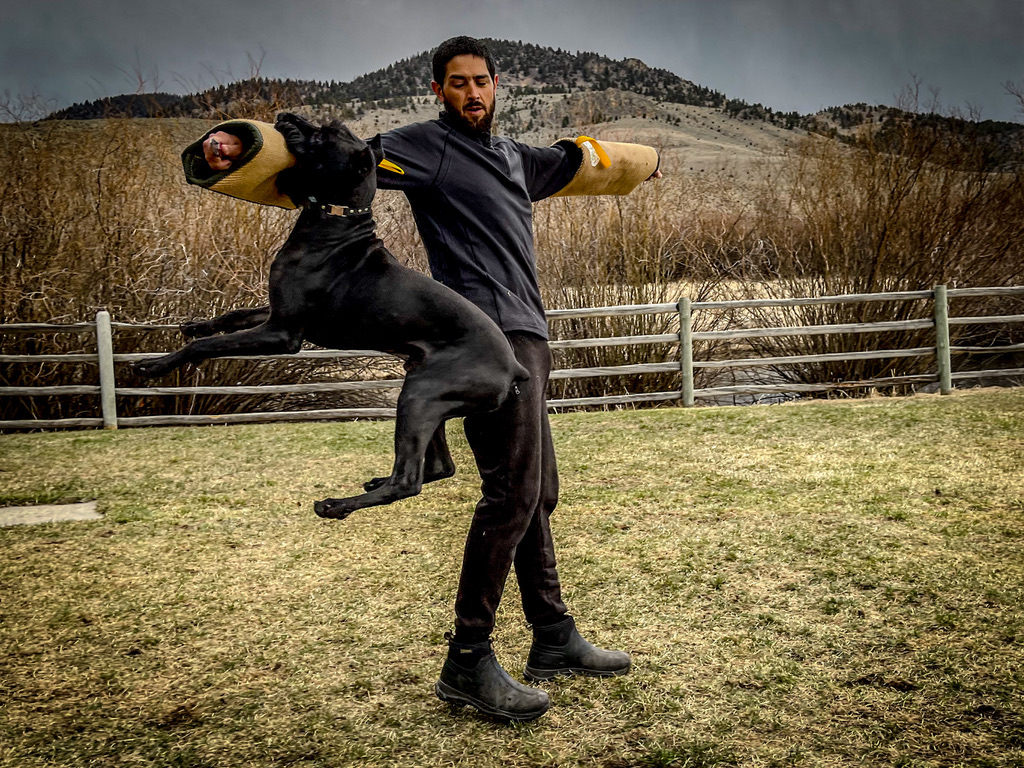
In 2009, for the initial first year and a half of the program, we utilized what we thought were standard decoys in the sport industry. What we quickly realized was that the decoys were actually reprogramming our dogs.
Example: when we called our dogs out, the decoys would stop — and the dogs went out. In several real-world situations, we realized that the dogs were not outing because they were associating the individual stopping. It wasn't until mid-2011, after watching video of why our dogs were performing just as they'd been trained but the results in their actual disengagement was not matching the training, that one of our astute handlers — who had nothing to do with canines — absorbed the disconnect.
From that point forward, we started training other individuals who understood the human factor — the behavioral, realistic factor of the kinetic engagement between dog and canine. That is when our research showed us that we had to re-engineer from the decoy perspective at the behavioral, instinctive, kinetic engagement level.
It's for this reason that our decoy program was designed and changed greatly from the standard sport decoy — or what we officially call "dog catchers." That was not what we were looking for. And for that reason, we went internal, and designed our own program.
A more appropriate name for our decoys. Not dog catchers. Not sport helpers. Sparring partners in a kinetic behavioral exchange.
We wanted the feedback not primarily for the handler — but for the canine.
Many times if you look at what the sport decoys do today, the dog bites the decoy and the decoy makes a little sound. That is appropriate and good for the sporting community. But our whole matrix is that anyone that gets involved with our canines has to contribute to the development of the canines — not just the handler, but primarily focused on the dog.
Unfortunately, this is not true in the decoys of today. The decoys of today allow dogs to get bites on mostly padding and limited muscular contact with the human being's limb. The sounds that are echoed are standard — the same sounds that the majority of decoys make. But there is no behavioral change. That is the problem.
The dog's picture is: bite, hold, no matter what, wait for the recall out — and for the behavioral response of the decoy to stop immediately. In the sporting world, that is excellent. It has its place. But it is an unrealistic picture for our dogs to work with.
The job of a decoy is not to echo noises and tell the handler what he feels about how strong the bite is — because that is totally subjective to how much pain the decoy can receive. What we want is the analytical objective response so that the dog understands: when he bites, and he bites hard, and the decoys are trained enough to know that that bite pressure they're receiving is strong enough to break bone if it was a real bite without any pads — we expect a decoy to respond behaviorally, physically, mentally with that dog's engagement in the kinetic side.
For that reason we do not use sport decoys. We use a number of decoys.
Two dozen minimum per bite phase. Unpredictable. Deliberate. Doctrine.
It's for that reason that we use multiple decoys for our canines during their phase of kinetic introduction and engagement. We do not want the dog to become familiar with just one decoy, just one type of fighting style, just one type of rehearsed-over-and-over same-type demeanor.
Decoys, like anyone else, have a certain style that they like to use — unless they are robots and follow the style they're told and just repeat, wash, rinse the same type of style. Dogs can get used to the same behavior. Dogs can start predicting what that decoy is going to do.
That is what creates a solid decoy program and develops our dogs so that they understand that all human beings do not react the same way.
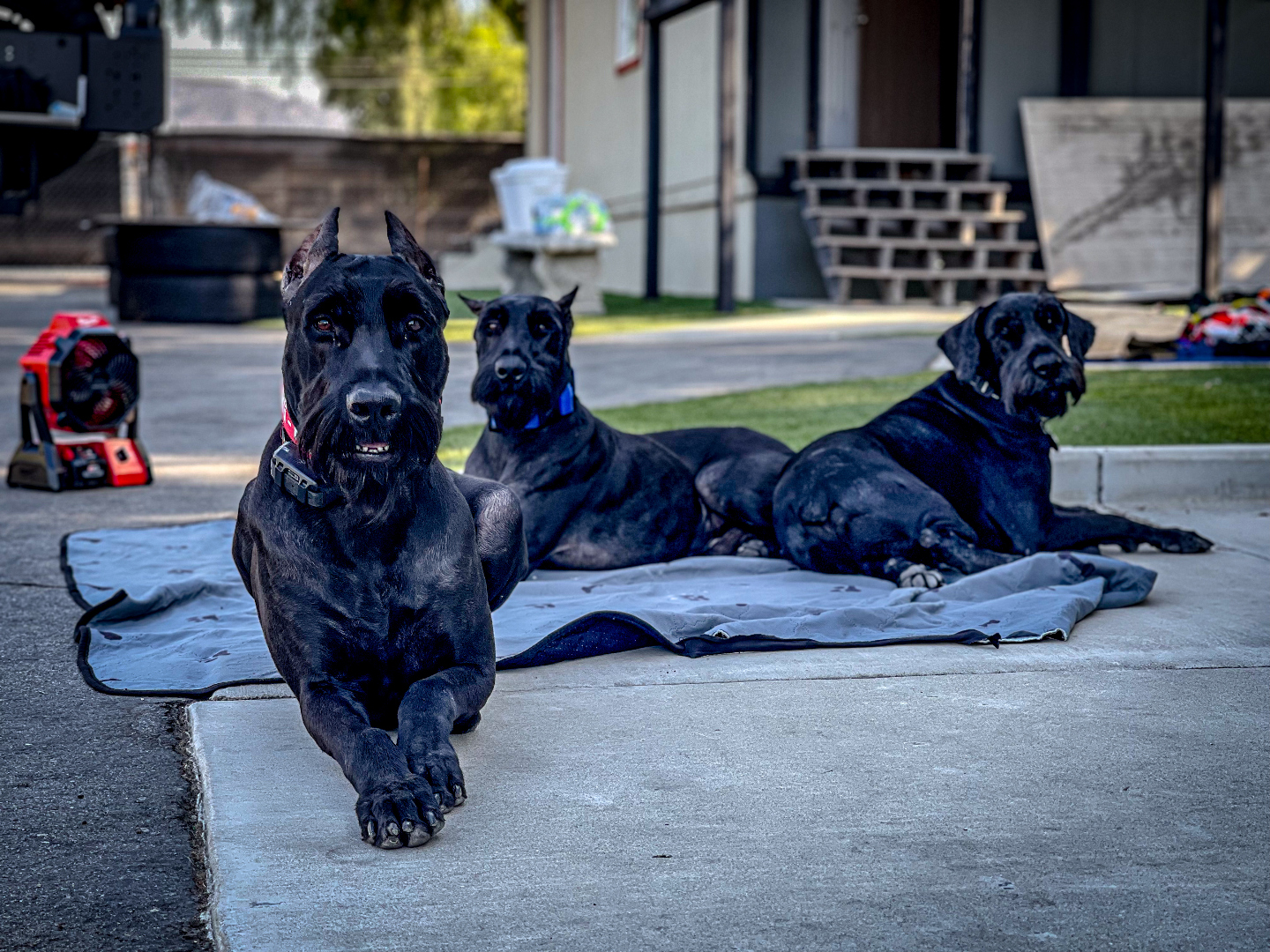
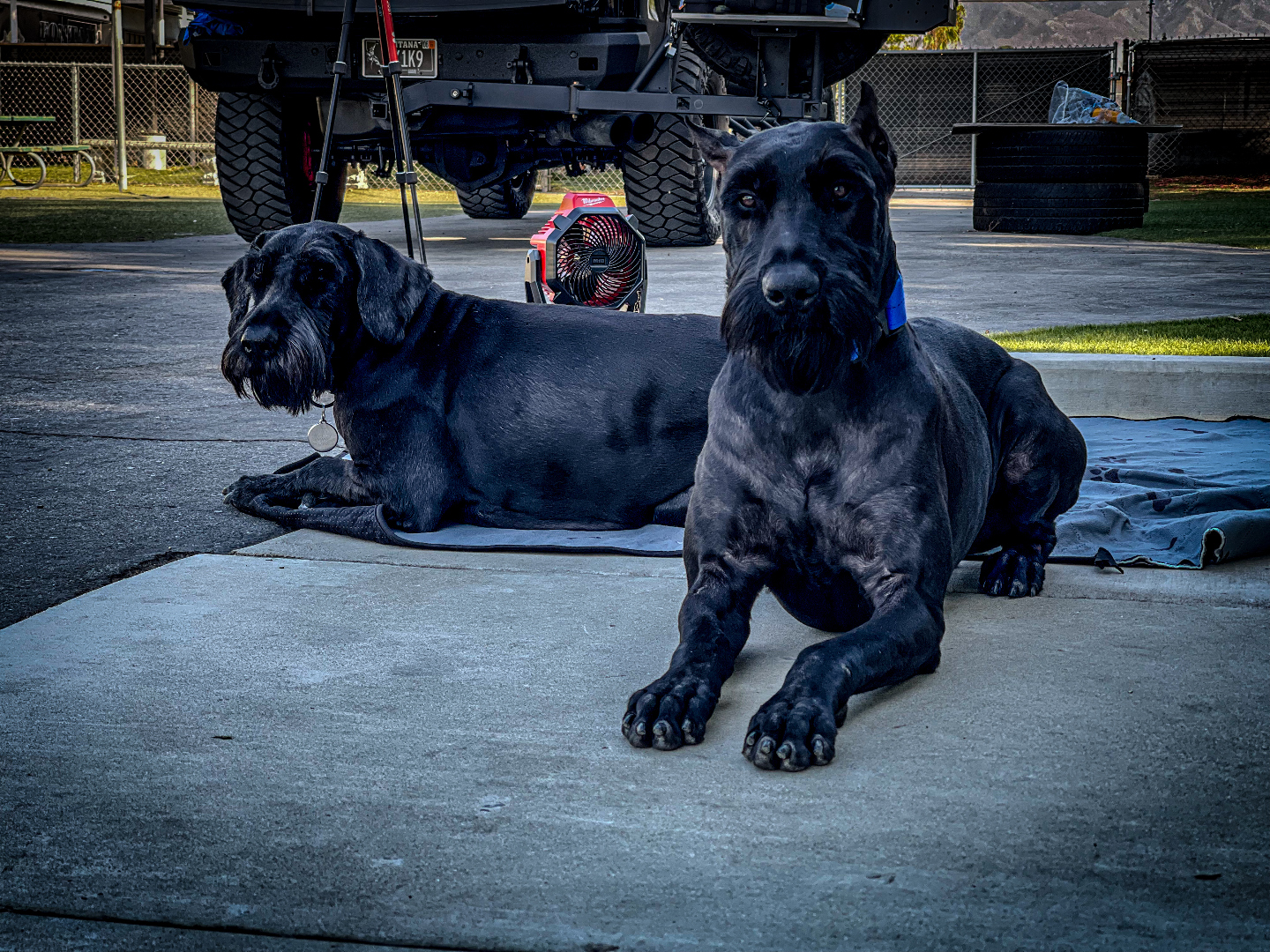
This has been a problem we see in the picture. The picture of the same decoy being used over and over — where one or two or three of the same decoys are used — is that the dog has a predetermined expectation of what that decoy should do. That is part of the smoke and mirrors game played in the civilian protection world. When a dog is transferred to an owner and he sees the same picture of the same decoy, the dog already knows what that decoy is going to do. It's already been rehearsed.
We avoid that by having multiple decoys and employing multiple behavioral kinetic engagements with the dog. The decoy has to be trained and knowing exactly what bite pressure is going to take. That is why we've incorporated technology in all of the bite suits, sleeves, and protective devices — so that when certain things happen, the decoy automatically knows that the bite pressure was hard enough to break bone or break a limb.
Having multiple different types of decoys also does not get the dog into complacency. It also helps build the handler so that the handler can understand the different instinctive behavior when it comes to kinetic engagements.
Many decoy schools have popped up. There are exceptions. There are also standards that must be maintained.
You see now many different decoy schools that are popping up, all doing basically the same thing. There are a few exceptions out there — a small handful of legitimate specialists in the field who have professional experience on the streets, who know how to decoy because of real-world exposure.
If you're looking for a solid decoy to work in enhancing your dog in the civilian aspect, see the list that we provide of vetted specialists.
Pressure redefined. Commitment redefined. The picture the dog is given — controlled with precision.
At no time will we ever allow a canine interacting with a KESP to be unrealistically abused. We apply pressure in our program on a daily basis to our dogs. That is how we get them to be a crystal-clear thinker in the engagement.
The problem we see today is that the measurement of how tough a dog is, is based on how much pressure they can take while holding a bite. That is pressure that drives a dog to focus on the bite — and determine how hard that dog can bite and hold on underneath unrealistic outside threat pressures.
Having outside threat pressure such as people with a chainsaw, leaf blower, yelling, running at them with garbage can lids, throwing water on them, and having the dog react — or not react — is not pressure in our opinion. What that does is reinforce what we call negative threat pictures.
If a dog sees a picture of a man running at him with a chainsaw, that is not a threat — it is part of the scenario. It is a type of trauma the dog is supposed to accept. What our program does with the canines is very simple: we give them a clean, clear, and strict picture. That picture is — we want them to instinctively do exactly what is within their instincts by defending, fighting. Anything they see coming near them, they need to protect themselves. If they're being targeted in the head by a threat — which could be a limb, an arm, a leg — they need to take the appropriate immediate actions and neutralize it.
When the arguments come that this teaches a dog to be a "neurotic biter" or "not a committed biter" — it is very simple. That word commitment in the bite has a different meaning to us.
When a dog commits to a bite, does that commitment mean the dog stays on for a long period of time — or does it mean that the dog hits the target extremely effectively, extremely efficiently, and then moves to the next target?
Our philosophy is effective, efficient fighters that can neutralize a threat. A threat — not being defined as just a person, but what is causing the damage: another limb, a leg, somebody about to hurt them, someone kicking at them. We want the dog to recognize that and neutralize it. We also expect a handler to work in sync with their dog.
The main difference between a decoy and a KESP is that a decoy will give the handler what we believe is a subjective analytical assessment of what the dog is doing. When the dog has the majority of the bite suit in his mouth — more than the limb of the individual — the dog's picture is he's biting and thrashing or biting and pressing in. That is not an objective assessment on the kinetic engagement, because anybody can clearly see what the dog is doing.
The dog is biting. The dog is holding. The decoy is doing what — giving a few sounds like he has indigestion?
We believe giving a dog a false assessment — a return of a lot of bite suit in its mouth and just a few noises that are not behavioral instinctive response — gives them a completely incorrect picture of what their bite should do when it's in engagement.
We run one of the most comprehensive Kinetic Engagement Sparring Partner programs outside of the military. We've had multiple units' decoys come train with us under NDA — under agency NDA — to work their dogs for this kind of environment and develop them.
We understand the sporting world. They do exactly what they need to do for that sport, and we appreciate it. We do not disparage it. We encourage it as a good practice for the sport itself — but do not assume that that works, or that it is going to translate into real protection outside in the civilian world.
The feedback that you're providing to the handler — is it subjective or objective?
If you say it is objective — explain how it is objective. Explain how we can see it. How we know the data supports it. And how it's affecting the dog — not in a sport, but in real-world deployment.
The scenario you present to the canine — is it a realistic picture, or not?
If it's not a real picture, then the purpose of it must be dedicated for sport — which is not incorrect. It is just a picture that is used for sport. Confirm that.
A canine trained constantly for the sport — will it have an unflawed, unhindered response to a real-world situation once it's deployed?
How does the canine determine — once it's kinetically engaged with a threat on the street and it is being physically resisted, smashed in the head with a rock, stabbed in the neck — how will the canine know when to transition?
In a multiple-threat engagement, how will the canine know where to bite, how to bite, or how long to hold — if it is being trained in the focused, traditional bark-bite-and-hold? How does it know when to hold if for some reason the handler is incapacitated and cannot communicate with the dog verbally because of the chaos around it?
How much pressure can a canine take in a real-world threat when it is being beaten and hit by multiple attackers trying to get the dog off? Case in point — when you see dogs biting individuals on the street or fighting each other on the street, and people are trying to break the dogs apart — why doesn't the dog let go? Why don't the hits being thrown at the dog automatically release the dog from its prey in its mouth?
Where in your sport scenarios does it translate to real-world engagement? Once a dog has made contact and it's engaged in a kinetic engagement with the threat, and the threat now begins to fight it — at what point does the canine realize its handler is waiting for it?
Where in sport decoy scenarios is it relevant to real-world street applications?
Define pressure — psychological, physical, metabolic. What type of pressure are you talking about? Can you define it, and break down how that pressure develops and builds a dog in all the aspects associated with a kinetic engagement?
Is the pressure you're applying to the dog once it's engaged in the bite — is that pressure to reinforce the model that the dog must hold onto its target regardless of what is going on physically, metabolically, mentally?
If so — isn't the pressure you are pushing onto the dog driving home the fact that we are more building a tolerance to pressure than a mental, intellectual pressure on the dog? An example would be in a gym doing negative reps — or what Navy SEALs go through with high-stress inoculation — pushing the SEAL team member to see how much pain they can take and still operate.
How would you define an objective feedback to the canine — where it sees a clear picture of the difference between sport engagement and real-world engagement? How does the dog know the difference if it only sees the typical standard sport protection scenarios presented by Ring Sport, Mondio, PSA, IGP, KNPV, and the other protection sports out there?
How does the dog know the difference between sport multi-threat engagements versus real-world multi-threat silent engagements? Example: the dog has engaged with a threat, a second person shows up and starts stabbing the dog quietly and unassumingly. How does the dog determine the difference?
What is the purpose in signaling the dog when it is fast approaching you once it's been deployed — by holding one arm out or giving him one leg and telegraphing to the dog you want him to bite there, and then catching the dog? How does that translate to real-world protection for the dog to see a picture?
There is a very mixed picture that the dog gets in real-world scenarios. This is why different industries have different purposes, different driving mechanisms for their dogs. That's why detection dogs aren't real apprehension dogs if they're single purpose. That's why when you have police dogs, you have police failures — because the dogs don't understand the picture, or don't clearly understand the picture. The inconsistencies of the sporting world — the disconnect between sporting decoys and real KESPs — that's the real difference.
The other difference is the fluidity of one or two decoys used by most producers of protection canines. They only use a handful of decoys because the dog studies the behavioral signatures of those decoys — so the dog has no real picture of other threats.
This is Wave 1. The professional library is growing. Each section will be released as it clears review and is authorized by the Senior Handler.
Bite suit selection, sleeve grades, protective gear, decontamination protocols.
Which suits, which bite areas, technology-embedded pressure measurement.
Multi-decoy rotation methodology. Behavioral instinctive response development.
What a real protection dog is — versus a sport dog wearing the label.
KESP sessions, kinetic engagement documentation, protocol walkthroughs.
Long-form interviews with the Senior Handler and vetted professionals.
Subscriber-gated professional dispatch. Doctrine updates. Field notes.
Equipment tested, rated, and released by K1K9. Objective. Nothing sponsored.
Agency and discerning private principal placements. Vetted pipeline only.
Program audits, agency briefings, doctrine consultation engagements.
Adversarial doctrine review. We test your program the way threats will.
For decoys, trainers, and agency handlers seeking to train under the K1K9 KESP program. All applications are reviewed by the Senior Handler. NDA required. Not all applications are accepted.